
01 · BasicsWhat Meteora is, in one paragraph
Meteora is a decentralized liquidity protocol on Solana. It does not run an order book and it does not hold your funds: it publishes on-chain programs that pool tokens, price trades and pay the people who supply the tokens. Meteora describes itself as the most composable liquidity layer for liquidity providers, launchpads and token launches on Solana, and that phrase is a fair summary of what it actually does.
Three groups meet in its pools. Traders swap one token for another, usually without ever visiting meteora.ag, because aggregators route their orders through Meteora pools behind the scenes. Liquidity providers deposit pairs of tokens and earn a share of every swap fee. Launchpads and token teams use Meteora's bonding-curve and launch-pool programs to bring new tokens to market and hand them a liquid pool on day one.
When people search for "Meteora crypto" they usually mean one of two things: the protocol at meteora.ag, or its token, MET, which launched in October 2025. This site covers both, but the protocol comes first, because the token only makes sense once you understand the machine it is attached to.
What makes Meteora distinctive is not the idea of a pool, which is old, but the variety of pool designs it offers and how far it lets LPs customize them. A Meteora LP can choose a narrow or wide price range, decide how liquidity is shaped inside that range, deposit only one token, collect fees only in the quote token, or lock liquidity permanently while still claiming the fees. That flexibility is why Meteora attracts professional market makers and memecoin launch teams at the same time.
It also explains why Meteora rewards homework. A pool on Meteora is not a savings account with a quoted rate. It is a market position whose outcome depends on price movement, trading volume and the choices you make when you open it, and the rest of this guide is written to make those choices less of a guess.
02 · HistoryFrom Mercurial Finance to Meteora
Meteora did not start as Meteora. Its story begins with Mercurial Finance, a stable-swap AMM launched on Solana in 2021, and it has been shaped by two crises: the FTX collapse and the LIBRA memecoin scandal.
Mercurial Finance
Mercurial built a stable-swap AMM for assets that should trade near one-to-one, such as stablecoins. It was associated with the FTX and Alameda ecosystem, and earlier lost roughly $800K of its MER token to hackers.
Relaunch announced
After FTX failed in late 2022, the team announced it would relaunch as Meteora. The announcement came in December 2022 and the rebrand took effect in early 2023, with a plan to migrate MER holders to a new token.
DLMM and the LP Stimulus Plan
The migration plan was replaced by the LP Stimulus Package, which promised a token airdrop to active liquidity providers. Meteora's flagship product, DLMM, went public around the turn of 2024, and the first airdrop campaign ran from January 2024 to mid-2025.
The memecoin boom and LIBRA
Early 2025 brought a surge of memecoin trading through Meteora pools. In February 2025 the LIBRA token, promoted by Argentina's president, launched using Meteora pools. Co-founder and CEO Ben Chow resigned amid the fallout; he denied having inside information.
New leadership and MET
Co-founder Zhen Hoe Yong, known as Zen, was named project lead a few weeks later. The MET token finally launched at its token generation event in October 2025. A class action tied to LIBRA was later dismissed with prejudice by a US federal court, without any finding on whether misconduct occurred.
The history matters for two practical reasons. First, a large part of the MET supply went to people who held Mercurial and to LPs who used the protocol during the stimulus years, which shapes who owns the token today. Second, the LIBRA episode is the main reason people ask whether Meteora is legit. The honest answer separates the protocol, whose contracts have not been exploited, from the reputational questions around some of the launches that used it.
03 · ProductsWhat Meteora offers, product by product
Meteora's official documentation groups its programs into core products, helper products and legacy products. Knowing which bucket a pool belongs to tells you how its fees, positions and risks behave.
Liquidity in price bins
The Dynamic Liquidity Market Maker splits liquidity into discrete bins, each a single price. Swaps inside the active bin have zero slippage, and a variable fee rises when the market turns volatile. LPs choose a range and a shape: Spot, Curve or Bid-Ask.
A configurable AMM
Dynamic AMM v2 is a constant-product pool with NFT positions, an optional price range, fee schedulers that start high and decay to deter snipers, fees collected in the quote token and permanently lockable liquidity that keeps earning.
Launch infrastructure
The Dynamic Bonding Curve lets launchpads start a token on a virtual curve with no seeded pool. When enough quote token has been raised, the curve graduates automatically into a DAMM v2 pool, so the token is tradable on a normal AMM from then on.
Helper and legacy products
Around the core sit smaller tools. Alpha Vault lets users deposit quote tokens to buy a launch allocation before public trading begins, which blunts bot sniping. Presale Vault, still in beta, runs a presale before any pool exists. Dynamic Fee Sharing splits claimable fees among a fixed group of recipients, and Zap lets you enter or exit a position in a single transaction.
Three older products are now labelled legacy: DAMM v1 (classic pools with LP tokens, including stable pools), Dynamic Vaults (single-asset vaults that lent idle liquidity out for extra yield) and Stake2Earn, the mechanism behind M3M3 memecoin staking. Existing positions still work, but Meteora directs new pools to DAMM v2.
| Product | Position form | Typical fee | Best known for |
|---|---|---|---|
| DLMM | Program account | Base fee by bin step, plus variable fee | Concentrated, shaped liquidity |
| DAMM v2 | Token-2022 NFT | Set by config; launch pools decay | Launches and locked liquidity |
| DBC | Virtual curve | Set by the launchpad config | Launchpad token launches |
| DAMM v1 (legacy) | LP token | 0.25% standard, 0.01% stable | Older stable and LST pools |
For most new LPs, the real decision is between DLMM and DAMM v2. DLMM rewards active management: a tight range earns more per dollar while the price sits inside it, and nothing once the price leaves. Full-range DAMM v2 pools are closer to set-and-forget, at the cost of lower fee capture per dollar. Our guide to how DLMM bins and dynamic fees work is the best place to start if you plan to provide liquidity.
Guides: the protocol and earning fees
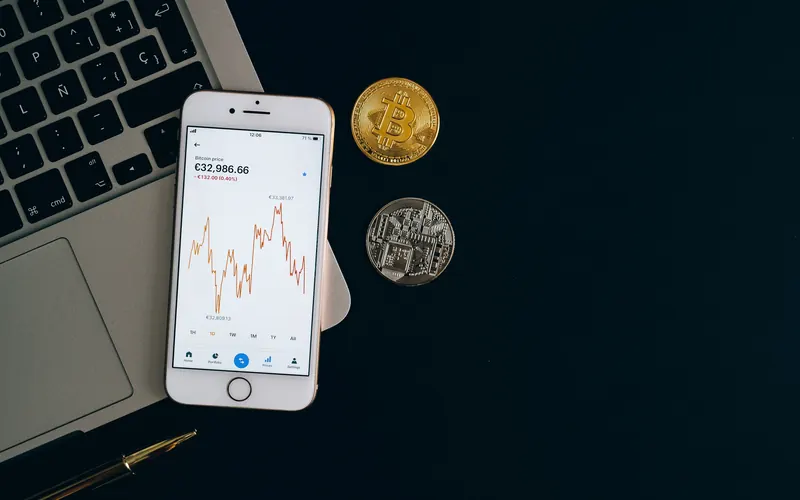
How to swap on Meteora
Swap tokens on Solana with low fees and tight slippage.
Read guide
DLMM: liquidity bins explained
How Dynamic Liquidity Market Maker bins and dynamic fees work.
Read guide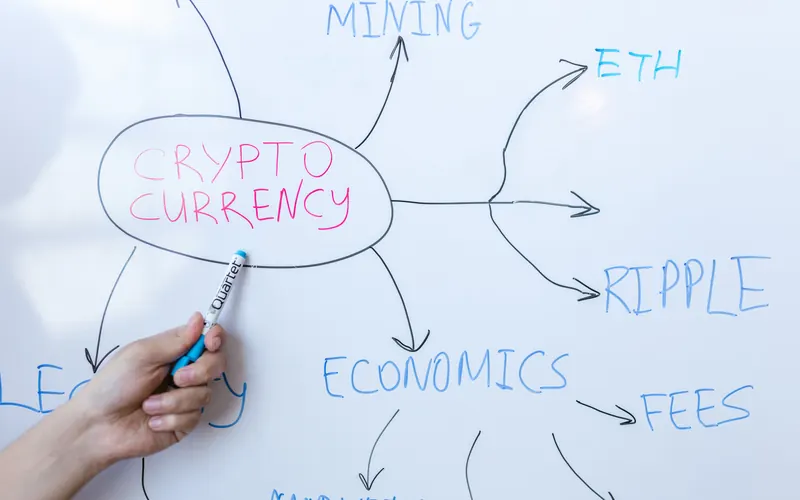
Spot, Curve and Bid-Ask strategies
Choose a DLMM shape that matches your market view.
Read guide
Dynamic AMM and DAMM v2
Full-range pools, fee schedulers and locked liquidity.
Read guide
How to add liquidity on Meteora
Pick a pool, size a position and manage it step by step.
Read guide
Earning fees as a Meteora LP
Where LP yield comes from and how to estimate it honestly.
Read guide
Impermanent loss calculator
Measure IL before you deposit and learn how to limit it.
Read guide
Dynamic Bonding Curve and launches
How token launches, Alpha Vaults and DBC pools work.
Read guide04 · EcosystemJupiter, and who actually uses Meteora
You can use Meteora for months without visiting meteora.ag. That is because much of its trading flow arrives through Jupiter, Solana's main DEX aggregator, and the two protocols are closely linked by history.
The team that built Mercurial also built Jupiter, which is why media often call them sister protocols. In practice the relationship has three layers. Meteora pools are among the liquidity sources Jupiter routes through, so a swap on Jupiter may be filled partly or entirely by a Meteora DLMM or DAMM pool. Meteora's own website embeds Jupiter Terminal, so the swap box on meteora.ag is a Jupiter route across all of Solana. And when MET launched, JUP stakers received 3% of the MET supply.
Jupiter is therefore complementary rather than a direct pool competitor. Meteora's competitors for LP deposits are other Solana DEXs such as Raydium and Orca, and launchpads that run their own curves.
From passive to professional
Some LPs park a wide Spot position on a major pair and check in weekly. Others run tight Curve or Bid-Ask ranges and rebalance daily. Meteora's own figures for the first half of 2026 put LP fees at about $140M, with roughly three quarters coming from pools of external tokens rather than majors.
Mostly via aggregators
Traders rarely choose Meteora directly; their router does. Their concern is price, fees and slippage, all of which depend on which pool fills the trade. Within a DLMM bin, the price is fixed, which helps large trades on deep pairs.
Infrastructure for launches
Launchpads such as Believe, Bags and Jupiter Studio are reported to build on the Dynamic Bonding Curve, graduating tokens into DAMM v2 pools. Fee schedulers and Alpha Vaults help them blunt the bots that snipe the first seconds of trading.

This mix of users is what gives Meteora both its strengths and its rough edges. Launch activity produces large bursts of volume and fees, but it also means thousands of new, often short-lived tokens appear in Meteora pools. A pool existing on Meteora tells you nothing about whether the token in it is any good.
05 · TokenThe MET token in brief
MET is Meteora's token on Solana. It launched at its token generation event in October 2025 with a fixed total supply of one billion, of which 48% was unlocked at launch.
The unlocked half went mainly to the people the protocol owed: 15% to Mercurial holders, 5% to a Mercurial reserve, 15% to LPs under the LP Stimulus Plan, 3% to JUP stakers, and smaller slices to launchpads, contributors, the M3M3 plan and an exchange and market-making reserve. The team (18%) and the Meteora reserve (34%) unlock gradually over six years, so new supply reaches the market every month until 2031.
On value accrual, the picture is modest and worth reading precisely. Meteora collects protocol revenue as a basket of tokens rather than converting it automatically. The team has run discretionary buybacks funded from the treasury, which are not burned automatically. Since mid-2026 a Referral Staking program shares 10% of DLMM protocol fees, paid in USDC, with MET stakers. None of this guarantees any price outcome, and the token has traded well below its launch-day high at the time of writing. The live price sits in the panel at the top of this page.
Guides: MET token, buying and airdrops

MET token and tokenomics
Supply, allocation, utility and live MET price.
Read guide
MET price outlook
Drivers, scenarios and a market-cap calculator — no hype.
Read guide
How to buy Meteora (MET)
From fiat to SOL to MET in your own wallet.
Read guide
Meteora airdrop and points
How the MET airdrop worked and how to avoid fake claims.
Read guide06 · DataKey numbers, and how to read them
Meteora's headline metrics move daily and depend heavily on who measures them. Treat any single figure as a snapshot, and always ask which source and which time window it comes from.
| Metric | What it tells you | Approximate level |
|---|---|---|
| Total value locked | Tokens deposited in pools | About a quarter of a billion USD |
| 30-day volume | Recent trading activity | Around $4B |
| All-time volume | Cumulative trading since launch | Over $340B |
| All-time fees | Total paid by traders | About $1.5B |
TVL is the number most people quote, but for a protocol like Meteora volume and fees say more. Meteora's pools turn over their deposits quickly, so a moderate TVL can generate large fee income. Within the wider Solana market, Meteora's DLMM ranked around eighth among Solana DEXs by 30-day volume on DeFiLlama at the time of writing, in a market where total Solana DEX volume was in the tens of billions per month.
Sources disagree, sometimes widely. Meteora's own data API reported a combined TVL across DLMM, DAMM v2 and DAMM v1 of roughly $290M on the same day DeFiLlama showed about $257M. Fortune's Crypto 100 ranking, which placed Meteora eighth, cited around $800M in annualized fees, while DeFiLlama counted roughly $389M over the trailing year. Neither is wrong; they use different methods, time windows and token pricing. Our guide to reading Meteora TVL and stats explains how to compare them fairly.
07 · RiskRisks and safety, summarized honestly
Meteora's programs have been audited repeatedly and, as far as public records show, never exploited. That is meaningful, but it does not make depositing safe. Most losses on Meteora come from markets and tokens, not from code.
What is reassuring
- Multiple audits of DLMM, DAMM v2 and DBC by firms including OtterSec, Offside Labs, Zenith, Sec3 and Sherlock.
- A public bug bounty run through OOO Security.
- No smart-contract exploit of Meteora programs on record.
- Self-custody: funds stay in on-chain pools, not with a company.
What to watch
- Impermanent loss, sharper in tight DLMM ranges.
- Scam, honeypot and rug-pull tokens in permissionless pools.
- Upgradeable programs with admin roles held by the team.
- Phishing sites, fake airdrop claims and lookalike domains.
Two incidents shape the record. In early 2026 the team lost about $1.5M of treasury funds to a fraudulent OTC counterparty during a planned MET buyback; users' funds were not affected. And the LIBRA affair raised questions about how some launches used the protocol, questions that a dismissed lawsuit did not answer either way. Read both as signals about operational and reputational risk rather than about the contracts.
The most useful habit is the one Meteora's own safety guide recommends: before you buy or provide liquidity for any token, check its mint address and look it up on tools such as RugCheck, JupShield and Jupiter's Organic Score. Ten seconds of checking avoids most of the bad outcomes new users run into.
Guides: ecosystem, data and safety
Is Meteora safe?
Audits, incidents and the real risks for LPs.
Read guide
Meteora TVL and stats
Live TVL, prices and how to read protocol metrics.
Read guide
Meteora and Jupiter routing
How Jupiter routes trades through Meteora pools.
Read guide
Meteora vs Raydium vs Orca
Compare Solana DEXs for swappers and liquidity providers.
Read guide
The Solana DeFi ecosystem
Live network stats and the protocols that matter.
Read guide
Staking SOL and LSTs
Native staking, liquid staking and LST pools on Meteora.
Read guide08 · StartHow to get started, from SOL to your first position
Everything on Meteora begins with SOL, Solana's native token, which pays for transactions and account rent. Here is the shortest safe path from zero to a first swap or liquidity position.
Buy a little SOL
Use a licensed, regulated exchange with card or bank deposits. Start small: you can always add more once the process feels familiar.
Set up a self-custody wallet
Install a Solana wallet such as Phantom, Solflare or Backpack from its official site. Write the seed phrase on paper and store it offline.
Withdraw SOL on the Solana network
Copy your wallet address, choose the Solana network in the exchange's withdrawal form and send a small test amount before the rest.
Make a first swap
Connect your wallet at meteora.ag, use the swap box and trade a small amount of SOL for USDC. Check the price impact and the minimum received before signing.
Open a small position
Pick a deep, familiar pair, such as SOL and USDC, start with a wide range and keep at least 0.05 SOL spare for fees and rent.
A sensible first month is to swap a few times, open one wide position on a major pair, watch how fees accrue and how the position reacts when the price moves, then close it and confirm the rent comes back. After that, the guides on strategies and impermanent loss will make far more sense, because you will have seen the mechanics with your own money at a size you can afford to lose.
Guides: wallets and buying SOL

How to buy Solana (SOL)
Buy SOL safely and move it to a self-custody wallet.
Read guide
Choosing an exchange for SOL
What to check before you buy: licences, fees, withdrawals.
Read guide
Best Solana wallets for DeFi
Phantom, Solflare and Backpack compared for Meteora users.
Read guide
Phantom wallet review
Setup, security and using Phantom with Meteora.
Read guide
Solflare wallet review
Staking-first Solana wallet with hardware support.
Read guide
Backpack wallet review
Multi-chain wallet with xNFT roots and an exchange.
Read guideMeteoraCrypto.finance is independent: it is not run by Meteora, and it has no partnership with any exchange or wallet mentioned here. Nothing on this site is financial advice. Use what you read as a starting point, verify the important parts in Meteora's official documentation, and size every position as if it could go wrong.